
BLOG 1: MY STORY WITH CHRONIC PAIN & FINDING A WAY FORWARD
Why I’m here
This wasn’t where I thought I’d be right now

If you’d told me a decade ago that I would one day be writing publicly to help raise awareness of chronic pain and the extraordinary advances in modern pain science that are changing how we understand and approach it, I would probably have looked at you in complete confusion!
And if you’d added that I would have trained as a Pilates Instructor, be creating content for social media and planning a podcast, I expect I’d have asked:
Okay, why? And what’s a bloody podcast - or a Reformer, for that matter?
…Probably followed by a few “What the F**ks?!”
Partly because I assumed I would still be practising as a Family Solicitor: the career I spent more than six years training for and almost a decade building - funding myself to the max through undergraduate and postgraduate loans, countless part-time jobs and badly paid paralegal work.
And partly because I never pictured myself doing anything quite so personal…or so public.
My social-media résumé? Five Instagram posts, no reels and a relatively inactive Facebook account, that’s more a twice yearly family photo archive and Marketplace sales. My teenage twin daughters think I’m ancient because (a) I still have Facebook, and (b) I continue to message and use my phone with only one hand!
But that’s the point really - I’m not here because I’ve perfected anything I’m about to do. I’m here because the message seems too important to wait until things are ‘just right’.
This first series is about chronic pain and the extraordinary changes in modern pain science that are transforming how we understand and approach it. Because it’s the story that changed the direction of my life. And, In many ways, it has taught me more than anything else.
I also believe parts of my story will sound painfully familiar to more people than we realise.
Chronic Pain: Why Greater Awareness Matters
It’s such a shame, but paradoxically, most of us don’t fully understand a condition until we, or someone we love, experience it first-hand.
By then, we’re already playing catch-up.
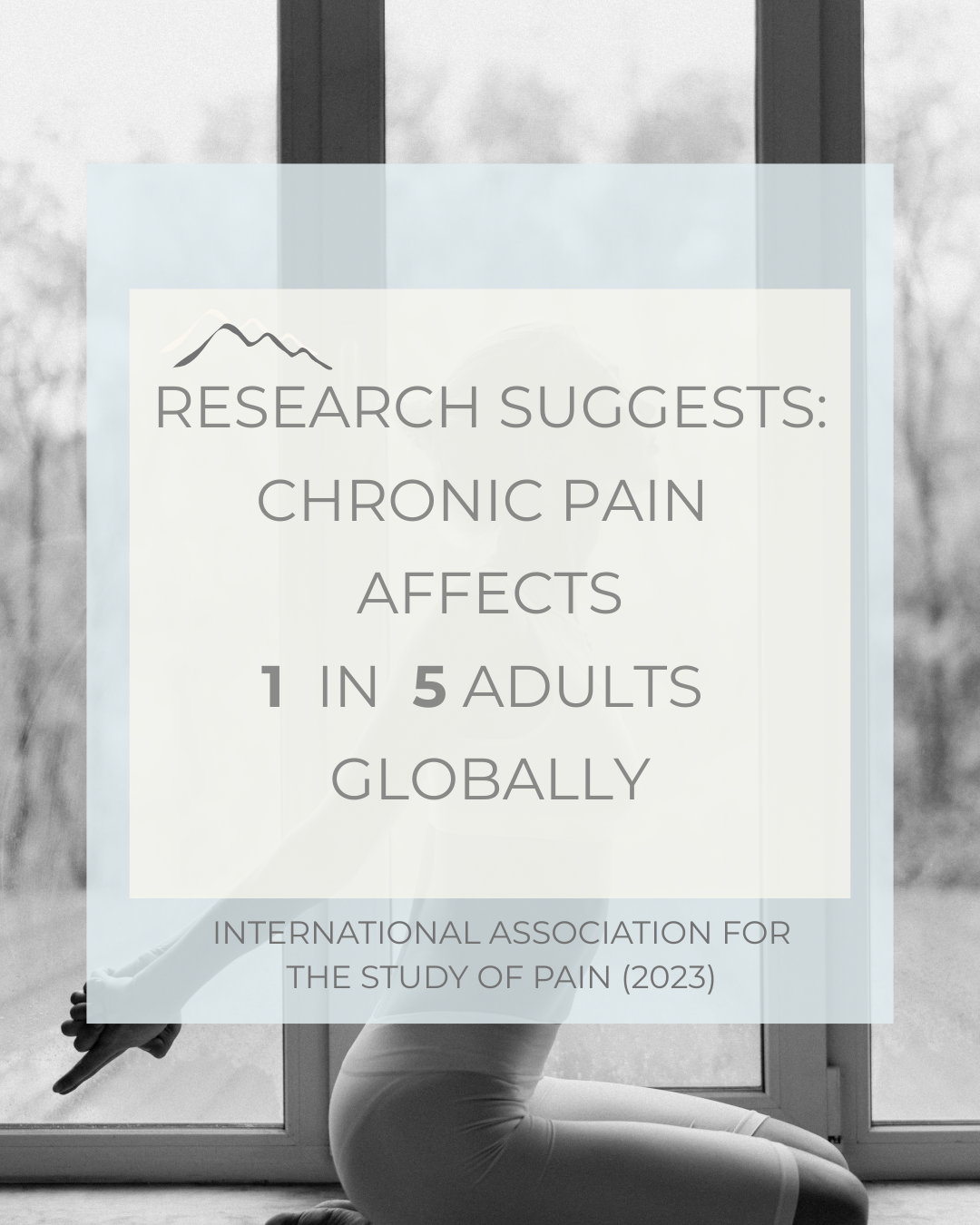
And chances are, at some point, you or someone close to you will experience a form of chronic pain, because it’s incredibly common. Research suggests it affects around 1 in 5 adults globally, and is one of the leading contributors to the global burden of disease and disability.¹
And here in the UK, the numbers are even more striking. According to figures reported by the British Pain Society in 2024, chronic pain affects around 43% of adults - just under 28 million people.²
But despite its prevalence - and the he wider impact on individuals, families, healthcare systems and society - chronic pain still remains widely widely misunderstood.³
Over the past few decades, clinicians, researchers and advocates including Dr John Sarno, Dr Howard Schubiner, Nicole Sachs, and many others have challenged conventional assumptions about persistent pain and explored the relationship between the brain, body, nervous system, emotions and lived experience.
More recently, advances in neuroscience and pain research have moved that conversation considerably further.
Our understanding of chronic pain has evolved. And yet much of that understanding still hasn’t reached ordinary people.
Or not nearly enough, given what the advances in neuroscience has discovered.
That, ultimately, is why I’m writing this series. The more I’ve learnt, the more I’ve wondered why so many people living with chronic pain still know so little about this science. In her book Mind Your Body, psychotherapist Nicole Sachs describes finding herself, at times, almost despairing that she can’t simply “wave a magic wand and transplant this knowledge into the brain of every person” she knows! ⁴
I completely understand why.
Because once something has fundamentally changed the way you understand and recover from your own symptoms, it becomes very difficult not to wonder how many other people might benefit from learning about it too. What started as a need to help myself has slowly become a desire to help other people find this knowledge, hope and perhaps a way forward sooner than I did.
That’s really where Changing the Narrative began.
Changing the Narrative: What This Series Will Explore

This isn’t going to be the polished Instagram version of chronic pain, recovery or life. I’m not going to pretend I have all the answers or that recovery is linear.
I want to share the honest, frank and unfiltered version - what happened to me, what I was told, what I believed, what I’ve since learnt and what I’m doing differently now.
Through my own lived experience and my ongoing journey, we’ll explore what modern pain science has taught me about chronic pain and the brain; the pioneers, clinicians and researchers behind that work; why some of us may become more vulnerable to persistent symptoms; and the practical mind and body approaches that are becoming part of my own recovery.
Later in the series, I will look beyond individual recovery to the bigger conversations: how this understanding and approach to chronic pain - and other persistent symptoms - might be given the greater recognition it deserves within healthcare, education and public awareness, and how better integration could help support both patients and clinicians moving forward.
Books, research, podcasts and conversations with experts have transformed my own understanding. But I also know how daunting it can feel to find, absorb and make sense of all that information, particularly when you are already exhausted, frightened or simply trying to get through the day.
I hope that by sharing the science, the recovery approaches and the wider conversations through my own story, it will make them a little easier to understand and relate to.
If afterwards you want to dive more deeply into the books and research, that’s amazing. But if not, I hope this series can still give you a clearer understanding, a little comfort and perhaps somewhere to begin.
I’ll approach all of it with honesty, humour and practicality. Because if it helps even a few people recognise themselves sooner, find hope earlier or simply feel less alone, then this work will have been worthwhile.

For me, awareness is not only about sharing information.
I genuinely believe awareness and conversation can be comforting. Understanding something that has previously felt frightening or inexplicable, can begin to change our relationship with it.
And perhaps one of the most useful things we can do - even if still a little unsure - is simply to become a little more curious.
Curious about what pain is.
Curious about what has changed in modern pain science.
Curious about what our symptoms may be telling us.
And curious about whether there may be more than one way forward.
Because curiosity is often where wider change begins.
That’s why, as this series develops, I also want to keep asking one question:
What could we do better?
For ourselves, for one another and eventually within the systems designed to care for us.
So if you’ve ever felt confused by your symptoms, dismissed, overwhelmed by pain that doesn’t seem to make sense, or simply exhausted by trying to hold everything together…
I hope you’ll join me on this journey.
Let’s start talking.
Next Time…
BLOG 2: THE BEGINNING - WHEN PAIN ENTERED MY LIFE
I’ll take you back to where this story really begins. The months after my son was born, when pain crept in quietly, spread everywhere, and changed my relationship with my body, my identity, and my life, in ways I couldn’t yet understand.
Gentle Reminder : I am not a medical expert. Everything I share here and on Instagram is based on my lived experience and the practices that have helped me personally - drawing on research and literature from those who are experts. The content is not a substitute for professional medical advice. Always check with your doctor or a qualified specialist, if you are unsure about symptoms or regarding any medical condition and prior to starting any exercise regime.
References and further reading
-
1. International Association for the Study of Pain (IASP).Revision of the International Classification of Diseases (ICD-11): Pain Classification. IASP reports that chronic pain affects an estimated 20% of people worldwide and is a major contributor to the global burden of disease and disability.
IASP – ICD-11 Pain Classification2. British Pain Society.UK Pain Messages 2024. A consensus document produced with the Faculty of Pain Medicine, Physiotherapy Pain Association, Pain UK and Patient Voice Committee. It reports that approximately 43% of UK adults—just under 28 million people—live with some degree of chronic pain.
British Pain Society – UK Pain Messages 20243. International Association for the Study of Pain (IASP), together with the wider work of clinicians, researchers and organisations specialising in contemporary pain science. IASP has highlighted the continuing gap between advances in pain knowledge and their translation into clinical practice, healthcare systems, policy and public understanding, alongside the wider personal, family and societal burden of persistent pain. These themes are also reflected throughout the work of clinicians and educators including Dr Howard Schubiner and Nicole Sachs, and organisations such as SIRPA, whose work is explored in greater detail later in this series.
IASP – The Gap Between Knowledge and Practice
SIRPA – About SIRPA and its approach4. Sachs, Nicole J., LCSW.Mind Your Body: A Revolutionary Program to Release Chronic Pain and Anxiety. Avery, 2025 - “wave a magic wand and transplant this knowledge into the brain of every person” she knows. (Authors Note: P.xvii)
-
BOOKS:
Nicole Sachs - Mind Your Body (2025)
Dr Howard Schubiner - Unlearn Your Pain (May 2026)
WEBSITES:
SIRPA UK - UK organisation providing education and training in a science-based neuroplastic approach to chronic pain and persistent symptoms. https://www.sirpa.org/
LIVING PROOF - UK non-profit sharing education, resources and recovery stories around neuroplastic symptoms. https://www.livingproof.org.uk/
THE PAIN PSYCHOLOGY CENTRE UK - specialises in chronic pain and other neuroplastic symptoms, offering evidence-informed programmes grounded in the latest pain neuroscience - https://painpsychologycentre.co.uk/
UNLEARN YOUR PAIN: Dr Howard Schubiner - information, videos and resources on mind-body medicine and chronic pain. https://www.unlearnyourpain.com
BREAK AWAKE: With Nicole Sachs - https://www.yourbreakawake.com/
ASSOCIATION FOR THE TREATMENT OF NEUROPLASTIC SYMPTOMS (ATNS) - A US-based non-profit organisation dedicated to advancing awareness and understanding of neuroplastic pain and other chronic symptoms - https://neuroplastic.org/
PODCASTS:
FEEL BETTER, LIVE MORE - Dr Rangan Chatterjee × Dr Howard Schubiner
Episode #310 - 9 November 2022
“How To Heal Chronic Pain with Dr Howard Schubiner”Listen to Episode #310 — How To Heal Chronic Pain
Episode #662 - 3 June 2026
“The Revolutionary Science Of Recovering From Chronic Pain, Fatigue, Anxiety & Depression with Dr Howard Schubiner”THE CURE FOR CHRONIC PAIN - with Nicole Sachs
https://podcasts.cast apple.com/us/podcast/the-cure-for-chronic-pain-with-nicole-sachs-lcsw/id1439580309
This Might Hurt - Documentary featuring Dr Howard Schubiner
Follows chronic-pain patients as they learn and apply a brain/nervous-system approach to their symptoms.
This Might Hurt – official film website -
Nicole Sachs
Book: Mind Your Body (2025) - https://amzn.eu/d/9i47eaK
Podcast: The Cure for Chronic Pain - https://podcasts.apple.com/us/podcast/the-cure-for-chronic-pain-with-nicole-sachs-lcsw/id1439580309
Dr Howard Schubiner
Website: https://www.unlearnyourpain.com
Book: Unlearn Your Pain (2026 Edition) - https://amzn.eu/d/00PGgqrP
Top Podcasts:
Feel Better, Live More - Dr Rangan Chatterjee × Dr Howard Schubiner:
Episode #310 - 9 November 2022
“How To Heal Chronic Pain with Dr Howard Schubiner”Listen to Episode #310 — How To Heal Chronic Pain
Feel Better, Live More - Dr Rangan Chatterjee × Dr Howard Schubiner:
Episode #662 - 3 June 2026
“The Revolutionary Science Of Recovering From Chronic Pain, Fatigue, Anxiety & Depression with Dr Howard Schubiner”Other Podcasts Featuring Dr Schubiner: https://unlearnyourpain.com/podcasts-with-dr-howard-schubiner/
The Divided Mind - https://amzn.eu/d/0e0fsveQ (2024 Edition)
https://amzn.eu/d/02FJWYfO (2007 Edition)
Healing Back Pain (Reissue Edition) :The Mind-Body Connection (2018) - https://amzn.eu/d/01IAfZC5
The Mindbody Prescription: Healing the Body, Healing Pain (1998) - https://amzn.eu/d/079VIcIL
Alan Gordon (Pain Reprocessing Therapy) -
Book: The Way Out: The Revolutionary, Scientifically Proven Approach to Heal Chronic Pain (2021) - https://amzn.eu/d/0edk3udV
Georgie Oldfield MCSP (Founder of SIRPA UK):
Chronic Pain: Your Key To Recovery https://amzn.eu/d/0eCTMyeN
Dr David Clarke:
Book: They Can’t Find Anything Wrong (2007) - https://amzn.eu/d/0gU5uZIk
Book: Psychophysiologic Disorders: Trauma Informed, Interprofessional Diagnosis and Treatment (2019) [Clarke, Schubiner, Clark-Smith, Abbass] - https://amzn.eu/d/00Npe4vL
Book: A Diagnostic Guide for Psychophysiologic Disorders (2022) [Clarke, Schechter, Schubiner] - https://amzn.eu/d/00uuC1VO
Lorimer Moseley & David Butler (Pain Neuroscience Education) -
https://www.noigroup.com/Professor Peter O’Sullivan (Cognitive Functional Therapy) -
https://bodylogic.physio/ -
Dr Gabor Maté
When the Body Says No (2003) - https://amzn.eu/d/0t9FU8X
Dr Bessel van der Kolk
The Body Keeps the Score - https://www.amazon.co.uk/dp/0141978619
Sara Szal Gottfried MD
The Autoimmune Cure - https://amzn.eu/d/0hoLks7p
-
PODCASTS:
Feel Better, Live More - Dr Rangan Chatterjee × Dr Howard Schubiner
Episode #310 - 9 November 2022
“How To Heal Chronic Pain with Dr Howard Schubiner”Listen to Episode #310 — How To Heal Chronic Pain
Episode #662 - 3 June 2026
“The Revolutionary Science Of Recovering From Chronic Pain, Fatigue, Anxiety & Depression with Dr Howard Schubiner”This is the newest conversation around the publication of Dr Schubiner's new book Unlearn Your Pain (2026). It goes further into neuroplastic symptoms, childhood experiences, personality traits and vulnerability, as well as recovery.
The Cure For Chronic Pain - with Nicole Sachs
OTHER PODCASTS:
Featuring Dr Howard Schubiner -
https://unlearnyourpain.com/podcasts-with-dr-howard-schubiner/
YOU TUBE:
TEDx TALK: A New Perspective – Georgie Oldfield MCSP (2019) - https://www.youtube.com/watch?v=BxsBJgMKHrw&t=12s
Changing your Mind: Chronic Pain and the Brain (2022) - Featuring Actor/Producer Vince Vaughn and acclaimed pioneers in neuroscience, medicine and psychology - https://www.youtube.com/watch?v=u1NiU_k5jT0&t=4s
Professor Lorimer Mosely, The Pain Revolution (2017) - https://www.youtube.com/watch?v=nifGFIuVkUk&t=1s
Introduction to Mind-Body Medicine for Health Care Professionals by Dr Sarah Hadfield - https://www.youtube.com/watch?v=m3gwBOASNy8
INDEPENDENT FILMS:
This Might Hurt - Documentary featuring Dr Howard Schubiner
Follows chronic-pain patients as they learn and apply a brain/nervous-system approach to their symptoms.
This Might Hurt – official film websiteAll The Rage: Saved By Sarno - Michael Galinsky, Suki Hawley, David Beilinson (2017) - “Using a first-person approach to explore the work of renowned physician Dr. John Sarno and his radical methods to treating back pain, ALL THE RAGE examines the connection between emotions and health. Through interviews with Sarno, esteemed patients, and experts, the film offers a profound rethink of how we approach our health care - http://alltheragedoc.com/
-
Alan Gordon et al. (2021) - Pain Reprocessing Therapy (PRT), JAMA Psychiatry
https://jamanetwork.com/journals/jamapsychiatry/fullarticle/2784694Tor Wager et al. (2013) - Neurologic Pain Signature (fMRI research)
https://www.nejm.org/doi/full/10.1056/NEJMoa1204471 -
UK:
NHS - Chronic Pain Overview (UK)
https://www.nhs.uk/conditions/chronic-pain/Versus Arthritis (UK statistics)
https://www.versusarthritis.org/about-arthritis/data-and-statistics/British Pain Society.
UK Pain Messages - Infographic (2024)
https://www.britishpainsociety.org/media/resources/files/UK_pain_messages_infographic_April_2024.pdfNHS Fibromyalgia Symptoms - https://www.nhs.uk/conditions/fibromyalgia/symptoms/
GLOBAL:
IASP (International Association for the Study of Pain - global data)
https://www.iasp-pain.org/resources/factsheets/International Association for the Study of Pain (IASP).
High-Impact Chronic Pain Fact Sheet (2023)
https://www.iasp-pain.org/resources/fact-sheets/high-impact-chronic-pain/ -
CURABLE: https://www.curablehealth.com/
FREEME: https://freemehealth.com/sirpa/
NEUROWAZE: https://www.neurowaze.health/
Join the wider conversation
This post is part of an ongoing series exploring Chronic Pain and the mind-body connection.
If you’d like to see the accompanying Chronic Pain Instagram reels, or related content across Pilates and Movement, Mind and Body Wellbeing, Calming Interiors or Feel-Good Fashion - or if you’d like to leave a comment:
You can find it over on Instagram @rachel_kirkbride
