
BLOG 2: THE BEGINNING - WHEN PAIN ENTERED MY LIFE
The beginning…
When pain entered my life quietly

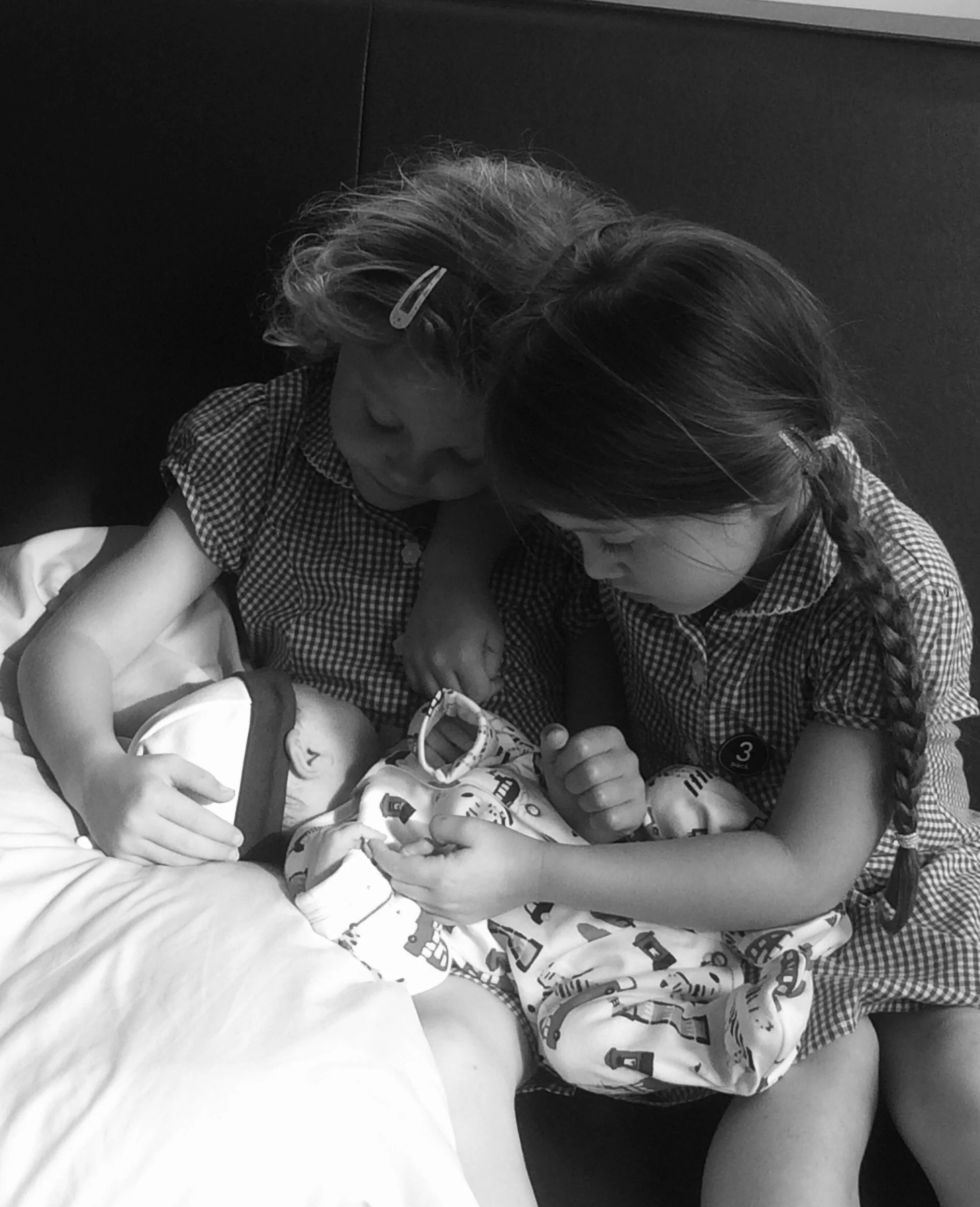
In 2016, shortly after the birth of my son, I began feeling pain…everywhere.
Arms, legs, back, torso, even my hands and feet. Not just pain, but stiffness, skin sensitivity and tenderness that made my body feel decades older than 35.
These were just some of the symptoms. I was a mum of three, to a newborn and five-year-old twins, with a husband building a demanding business. I expected exhaustion, of course. But I didn’t expect to feel this completely, bloody…awful.
And pain, constant pain, is tiring. It wears you down in a way nothing else does. The only time I wasn’t in pain, was when I was asleep.
I told myself it was just the baby phase - only this time I was five years older than my first pregnancy and, frankly, much more knackered to begin with. But it didn’t pass.
I had blood tests, MRIs, and endless examinations to rule out conditions like MS, rheumatoid arthritis, lupus. Even cancer.
Eventually, a private rheumatology consult pulled it all together and diagnosed Fibromyalgia.
I was told there’s no cure, but I’d be referred to a pain clinic and prescribed medication to help me function.
So what did it feel like?

Imagine the day or two after you’ve run a marathon; that deep, all-over ache and stiffness - except it never goes away. Add the tenderness your skin feels with the flu, and a bone-deep fatigue and heaviness that makes even simple tasks feel monumental.
That’s Fibromyalgia for me.
And everyone’s experience is different, depending on age, mobility, general health, and lifestyle. I was relatively young and fit - I’d just had a baby at 35, yes…but I’d been through a twin pregnancy before and recovered well. So, I could see even then, how, for others starting from a less healthy baseline, it could become truly debilitating.
For me, the pain wasn’t just felt in one place - it was everywhere. Constant, and easily worsened by poor sleep, stress, or simply pushing too hard.
Frequently I’d wake up and feel like my body had forgotten how to rest; like I’d spent the night running uphill rather than sleeping.
Parenting a baby and five-year-old twins through that, was…relentless.
It wasn’t “baby brain” or postnatal tiredness (after twins, you know what tired feels like!).
This was something else entirely. A body and nervous system stuck on overdrive.
At the time, I didn’t understand why my body was reacting like this, or how pain could exist without an obvious cause. That’s something I’ve learned much more about since; and we’ll explore the science behind it, the “why me?” and practical mind and body strategies, over the next few posts.
Survival Mode
Doing what I needed to get by
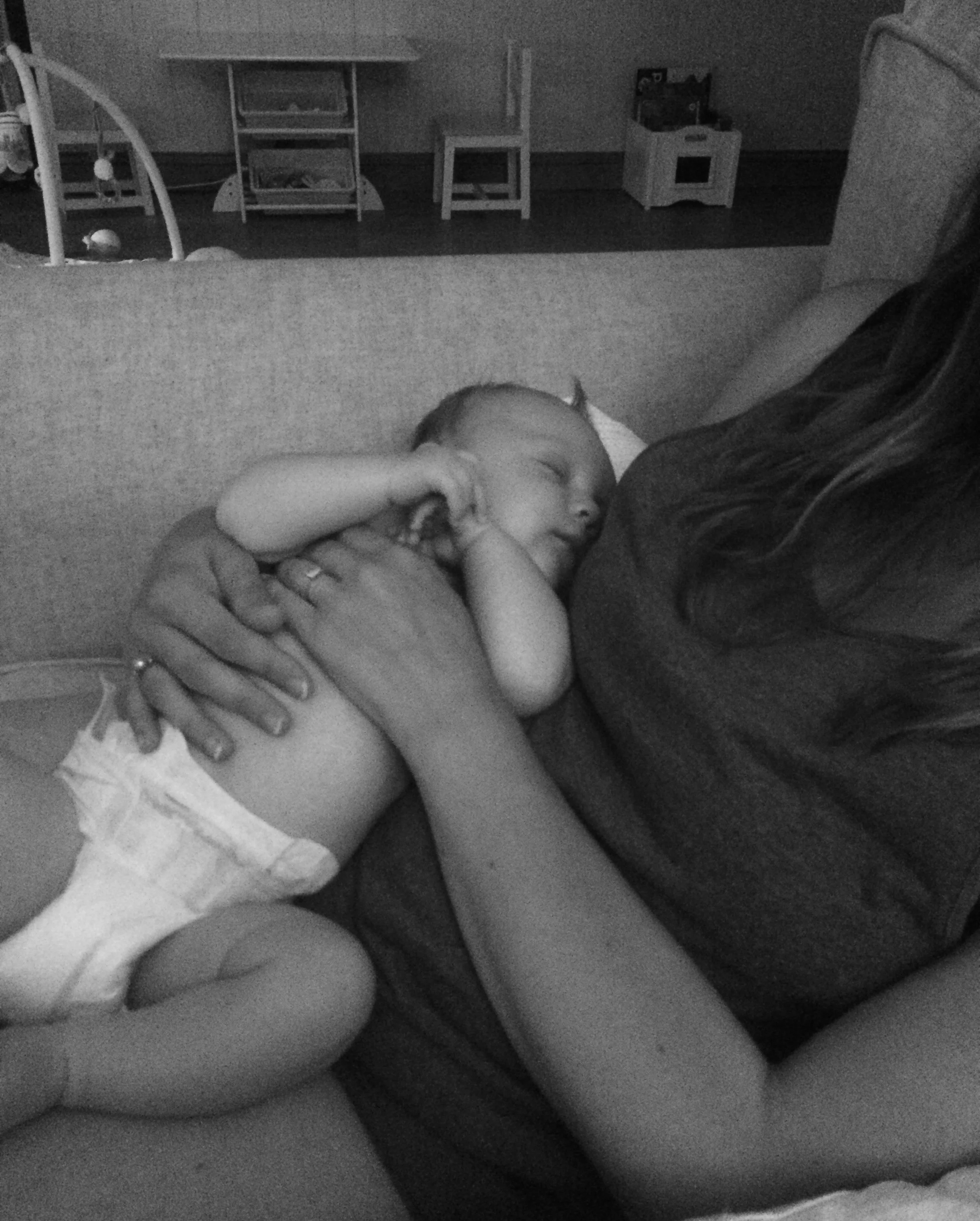
My initial aim was simple: reduce the pain enough to function, care for my kids, and get through each day.
I was prescribed three types of medication: Gabapentin, Duloxetine and high doses of Tramadol. They didn’t remove the pain, but they dulled it just enough that I could survive: care for my son, do the school runs and clubs, attempt sleep (unrefreshing at best), and return part-time to Family Law.
At the time, that felt like the deal: medication in, pain dampened to a functional level.
But always there.
Repeat.
Yet, what scared me more than the medication itself, was the thought of doing nothing else. I couldn’t accept the idea that this medicated, foggy version of me was as good as it gets, and I didn’t want that version of me for my kids, my husband, or anyone close to me.
Knowing this couldn’t be the end point

Even early on, I sensed this couldn’t be the long-term answer.
I decided to come off the Duloxetine and Gabapentin, and reduced the Tramadol by a third. It wasn’t dramatic, just a quiet instinct that I didn’t want to be taking more than I truly needed.
Of the three, Tramadol dulled the pain most noticeably. But it’s a strong opiate. Tolerance builds and the same dose doesn’t always have the same effect over time; what begins as relief can slowly become something you rely on just to stay level.
I didn’t understand the longer-term implications then. I was trying to stay afloat.
With what I know now, I would have made different choices. But at the time, I was doing my best with the information I had.
Still, even with the medication, it was a lot of pain to bear, as it did not eradicate the pain.
And then there was the bigger fear - the anticipated aches and pains of ageing and hormonal shifts (little did I know that seven years later I’d have a hysterectomy and be post-menopausal by 43). I just kept thinking: “what the hell am I going to be like in 10, 20, 30 years, if I don’t try to do something to help myself?”
So I knew from the outset that this baseline had to be temporary.
I wanted to be more than just “fine.”
I wasn’t prepared to tread water with a pair of pretty shitty armbands for the rest of my life.
The Turning Point
Finding a way forward
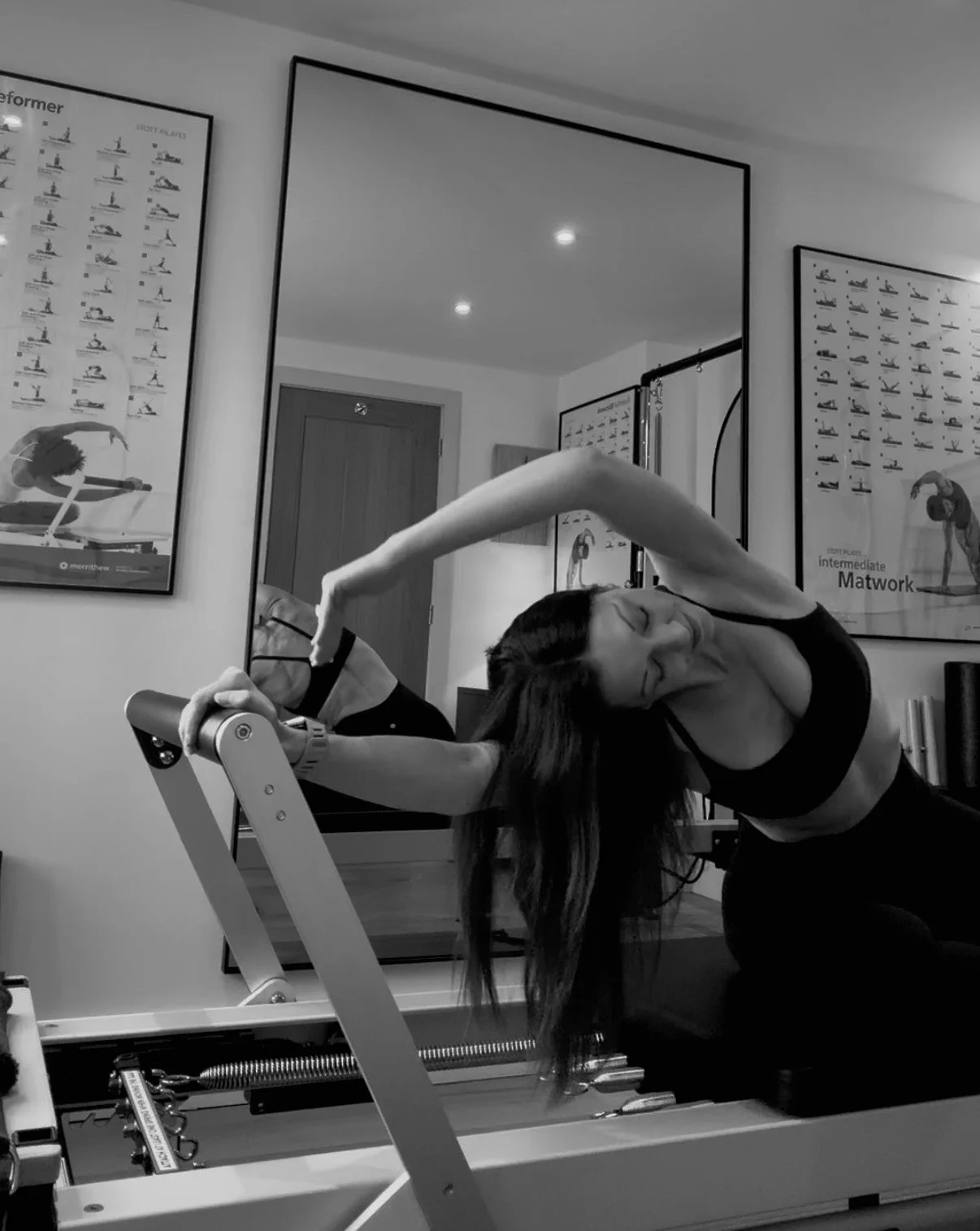
And that’s really where this whole-body approach began - the one I’ll be sharing throughout this series. Not instead of medical care, but alongside it. Gradually, piece by piece, it became my way forward.
I’ve been slowly tapering the Tramadol over the past year (at my request and very carefully, and with my GP). My hope is that by this time next year, I’ll no longer need medication at all. Not because I’ve “pushed through” anything, but because I now have a better, broader, understanding of chronic pain and of the mind and body tools that will get me there.
Why I’m sharing this & why these conversations matter?
I haven’t got everything right. But that’s the point. I want to share what I’ve learned so others don’t have to spend years figuring it out the hard way. If I can help make the journey clearer: by explaining the science in simple terms, sharing the whole body strategies and habits, and pointing you towards books, podcasts and research if you want to go deeper - then something good will have come out of all of this. Whether it helps someone recover, or even recognise the signs earlier than I did, that alone feels worthwhile.
I’ll share what’s worked, what hasn’t worked…and what I’ve got wrong! Because recovery, like life, is never a straight line. I’ve lived with chronic pain for nearly a decade, and if there’s one thing I know, it’s that silence or denial doesn’t help.
So if you’ve lived with chronic pain for some time and doctors have ruled out injury or disease and told you there’s nothing further they can do, I’m hoping this series may give you some of the tools to help yourself, like they’ve helped me.
This is me doing my part, however small. Because:
Chronic pain isn’t rare - it’s rarely understood.
And maybe, by opening up - with honesty, humour, and a bit of practicality, it can help Change the Narrative - one conversation at a time.
Next Time…
BLOG 3: UNDERSTANDING CHRONIC PAIN - WHAT MODERN SCIENCE KNOWS ABOUT PAIN
We’ll look at what experts and modern science have discovered about chronic pain - what’s actually happening in the brain and body when pain doesn’t switch off & why “it’s all in your head” misses the mark.
Gentle Reminder : I am not a medical expert. Everything I share here and on Instagram is based on my lived experience and the practices that have helped me personally - drawing on research, literature and insights from those who are experts, who I am learning from and who I admire. The content is not a substitute for professional medical advice. Always check with your doctor or a qualified specialist, if you’re struggling, unsure about symptoms or regarding any medical condition.
References and further reading
The references and further reading below, inform this ongoing series. They were cited in Blog 1 and will become more relevant as we begin exploring the brain science in the next post.
-
BOOKS:
Nicole Sachs - Mind Your Body
Dr Howard Schubiner - Unlearn Your Pain (May 2026)
Dr John Sarno -The Divided Mind : https://amzn.eu/d/0e0fsveQ (2024 Ed)
https://amzn.eu/d/02FJWYfO (2007 Ed)
WEBSITES:
SIRPA UK - https://www.sirpa.org/
UNLEARN YOUR PAIN: Dr Howard Schubiner - https://www.unlearnyourpain.com
PODCASTS:
https://drchatterjee.com/how-to-heal-chronic-pain-with-dr-howard-schubiner/
Nicole Sachs: The Cure for Chronic Pain Podcast
-
Nicole Sachs
Book: Mind Your Body (2023) - https://amzn.eu/d/9i47eaK
Podcast: The Cure for Chronic Pain https://podcasts.apple.com/us/podcast/the-cure-for-chronic-pain-with-nicole-sachs-lcsw/id1439580309
Dr Howard Schubiner
Website: https://www.unlearnyourpain.com
Book: Unlearn Your Pain (2026 Edition) - https://amzn.eu/d/00PGgqr
Dr John Sarno:
The Divided Mind - https://amzn.eu/d/0e0fsveQ (2024 Edition)
https://amzn.eu/d/02FJWYfO (2007 Edition)
Healing Back Pain (Reissue Edition) :The Mind-Body Connection (2018) - https://amzn.eu/d/01IAfZC5
The Mindbody Prescription: Healing the Body, Healing Pain (1998) - https://amzn.eu/d/079VIcIL
Alan Gordon (Pain Reprocessing Therapy) -https://www.painreprocessingtherapy.com/
Lorimer Moseley & David Butler (Pain Neuroscience Education) -
https://www.noigroup.com/Professor Peter O’Sullivan (Cognitive Functional Therapy) -
https://bodylogic.physio/ -
Dr Gabor Maté
When the Body Says No (2003) - https://amzn.eu/d/0t9FU8X
Dr Bessel van der Kolk
The Body Keeps the Score - https://www.amazon.co.uk/dp/0141978619
Sara Szal Gottfried MD
The Autoimmune Cure - https://amzn.eu/d/0hoLks7p
-
https://drchatterjee.com/how-to-heal-chronic-pain-with-dr-howard-schubiner/
Nicole Sachs: The Cure for Chronic Pain Podcast
Other Podcasts featuring Dr Howard Schubiner
https://unlearnyourpain.com/podcasts-with-dr-howard-schubiner/
-
Alan Gordon et al. (2021) - Pain Reprocessing Therapy (PRT), JAMA Psychiatry
https://jamanetwork.com/journals/jamapsychiatry/fullarticle/2784694Tor Wager et al. (2013) - Neurologic Pain Signature (fMRI research)
https://www.nejm.org/doi/full/10.1056/NEJMoa1204471 -
UK:
NHS - Chronic Pain Overview (UK)
https://www.nhs.uk/conditions/chronic-pain/Versus Arthritis (UK statistics)
https://www.versusarthritis.org/about-arthritis/data-and-statistics/British Pain Society.
UK Pain Messages - Infographic (2024)
https://www.britishpainsociety.org/media/resources/files/UK_pain_messages_infographic_April_2024.pdfNHS Fibromyalgia Symptoms - https://www.nhs.uk/conditions/fibromyalgia/symptoms/
GLOBAL:
IASP (International Association for the Study of Pain - global data)
https://www.iasp-pain.org/resources/factsheets/International Association for the Study of Pain (IASP).
High-Impact Chronic Pain Fact Sheet (2023)
https://www.iasp-pain.org/resources/fact-sheets/high-impact-chronic-pain/
Join the wider conversation
This post is part of an ongoing series exploring Chronic Pain and the mind-body connection.
If you’d like to see the accompanying Instagram reels, or related content across Chronic Pain, Pilates and Movement, Mind-Body Wellbeing, or if you’d like to leave a comment
You can find it over on Instagram @rachel_kirkbride
