
BLOG 3: UNDERSTANDING CHRONIC PAIN - What BRAIN SCIENCE HAS DISCOVERED
The ‘Sciency’ Bit

The ‘Sciency Bit

I deliberated at first about whether the science should come before talking about the “why me?” and the practical strategies I am using in my own recovery from fibromyalgia.
In the end, the answer felt fairly simple.
In hindsight, if I were diagnosed with a chronic pain condition today, gaining a basic understanding of pain, the brain and the nervous system is where I would begin. Unequivocally, every time.
As I explained in Blog 2, for years I focused predominantly on physical ways to ease my symptoms; most distressingly, constant widespread pain and muscle stiffness. Some genuinely helped to an extent, but they didn’t explain the wider pattern.
This is where that conversation deepens.
When I was diagnosed around a decade ago, this wasn't an explanation I was offered. Neither was much of what we know now about pain science as widely acknowledged or available. It was only years later that I began to discover this way of understanding chronic pain and persistent symptoms.
This is the explanation I wish I’d had at the start.
Because once I began to understand why pain can behave the way it does, so much more started to make sense.
A Lightbulb Moment: Understanding Pain
The explanation I wish I’d had at the beginning
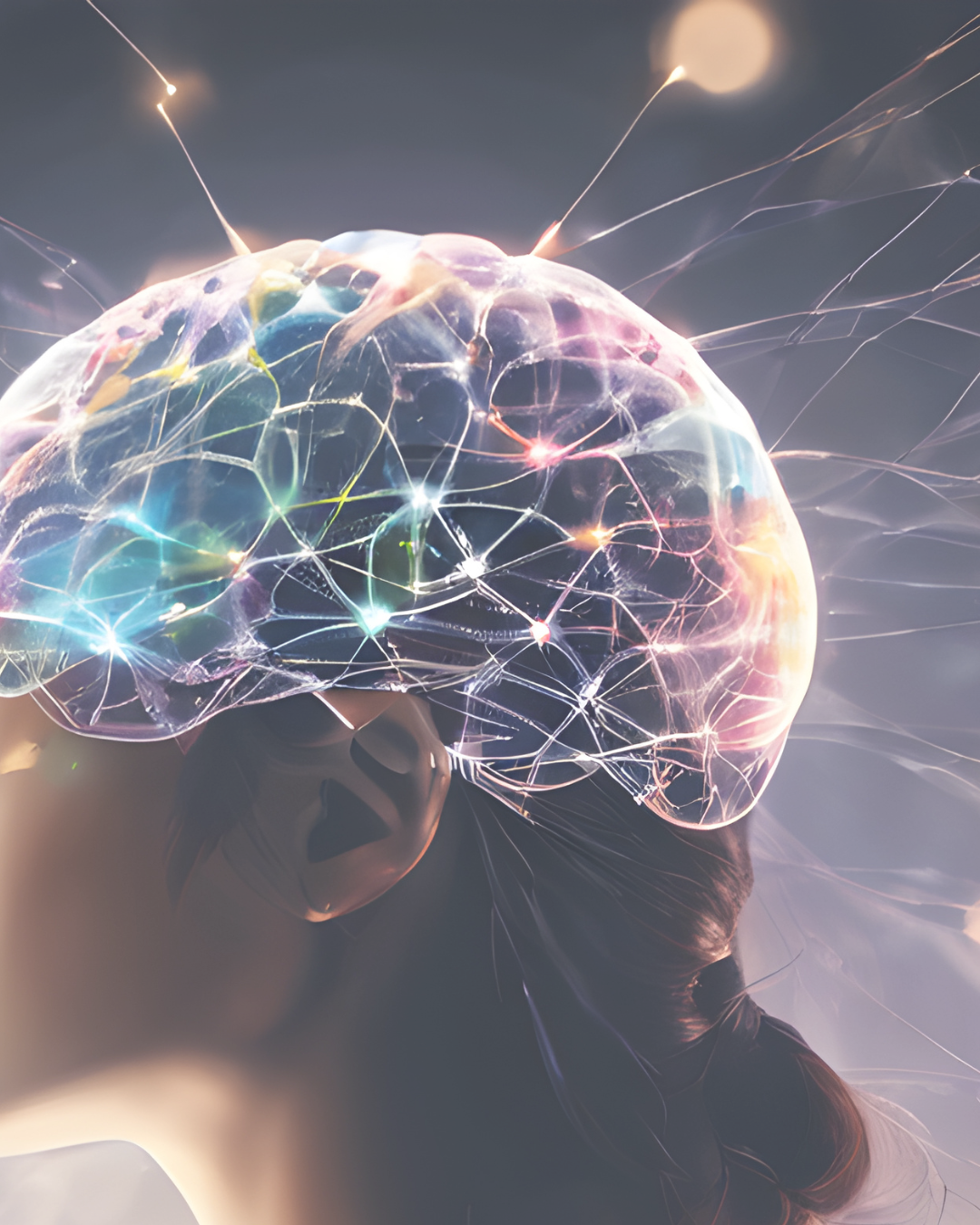
The growing sense that I was missing part of the picture eventually led me to search for a pain therapist, where I was first introduced to Pain Reprocessing Therapy (PRT).¹
From there, I discovered the work of experts and clinicians including Dr John Sarno, Dr Howard Schubiner, Nicole Sachs and Alan Gordon, as well as organisations such as SIRPA UK. I immersed myself in books, podcasts, documentaries and research, trying to understand whether there might be another explanation for what I had been experiencing.
I'll admit, I was sceptical at first.
But I've always tried to keep an open mind and I'm generally of the opinion, “don't knock it until you've tried it.”
I’m so glad I did.
For the first time, I encountered the concept of neuroplastic pain and a much broader body of modern pain science exploring the role of the brain and nervous system in persistent pain. I also discovered the earlier work of pioneering physician Dr John Sarno, who had described a mind-body approach to persistent symptoms decades before.²
At its simplest, I learnt that neuroplastic pain (like many other persistent symptoms) - are real, often debilitating physical conditions, driven by how the brain and nervous system process signals and perceived threat.¹ ³
What I hadn’t realised, is that every experience of pain is produced by the brain and nervous system - whether the source is a fresh injury, an infection, inflammation, structural pathology or a sensitised nervous system. ³
That doesn't make pain imaginary or “all in your head” in the dismissive sense in which that phrase is so often used, and indeed, I have experienced myself.
Your Body’s Alarm System - Pain Is a Protector
Most significantly, I learnt that pain is, first and foremost, a protective response. ³ ⁴
That message really began to sink in when I listened to Dr Schubiner’s 2022 podcast conversation with Dr Rangan Chatterjee. A phrase Schubiner uses repeatedly - and one echoed throughout the work of many experts in this field - is simply:
“Pain is a protector.” ⁴
When we burn a hand or break a wrist, pain is doing exactly what it is designed to do. It encourages us to stop, protect the injured area and allow it to heal.
It is an extraordinary and essential survival mechanism.
What I hadn't understood, was that sometimes this same protective system can become overprotective. Rather than settling once the original danger has passed, the brain and nervous system can remain increasingly sensitised to threat. Through learning, sensations, movements or situations associated with previous pain can themselves begin to signal danger, while fear, expectation or perceived threat can further influence the pain we experience. ³ ⁵
The pain is still real.
But the brain is responding as though we need far more protection than the present situation actually requires.
This genuinely felt like a lightbulb moment.
Stress, survival and when pain becomes the alarm

This knowledge also helped me understand the connection I had already noticed between stress and my symptoms.
Have you ever noticed pain worsening, returning or even appearing somewhere new - perhaps a headache, back pain or stomach pain - when you’re anxious, overwhelmed, exhausted or under pressure?
Modern pain science gave me a possible explanation. ³ ⁴
In his 2022 conversation with Dr Schubiner, Dr Rangan Chatterjee explores how profoundly context and perceived danger can influence the brain's protective responses.
Schubiner gives a brilliant example.
Imagine running across a field and breaking your ankle. Ordinarily, your brain is likely to produce pain that makes you stop and protect it.
But now imagine you've broken that same ankle while being chased by a lion. Suddenly, survival matters more than stopping.
Your brain may temporarily suppress the pain because, right now, the priority is:
to survive the lion. ⁴
The injury hasn't changed. The context has.
That example really stayed with me because it helped me understand something much bigger: our protective systems don't respond only to what is happening physically. They are constantly interpreting context and whether we are safe or under threat.³ ⁴
Once the danger has passed and safety is restored, the system can begin to settle again.
Although, thankfully, most of us aren't regularly being chased by wild animals, I learnt that our protective systems don't respond only to immediate physical threats. Modern life contains a lot of bloody “lions”!
Deadlines. Financial worries. Illness. Responsibility. Relationship difficulties. Perfectionism. People-pleasing. Constant notifications. And the hundreds of smaller pressures we absorb every day.
When those pressures accumulate without enough time to recover, the nervous system can become increasingly sensitised. Instead of returning fully to baseline, it can remain on high alert – in a constant state of fight or flight. Muscles tighten. Breathing becomes shallower. Digestion changes. And protective responses – including pain - can remain active, become easier to trigger and harder to switch off, even when there is no immediate physical danger. ³ ⁵
In her book Mind Your Body, Nicole Sachs describes what can happen when that protective system becomes increasingly sensitised with a wonderfully simple phrase:
"Pain becomes the alarm". ⁶
That simple analogy has been incredibly helpful to me.
Think about a smoke alarm. Its purpose is to protect you. If your kitchen is genuinely on fire, you absolutely want it to sound.
But imagine an alarm that has become so sensitive it goes off every time you make toast. The alarm isn't fake. It really is ringing - but it’s become oversensitive.
Perhaps the system responsible for protecting me had simply become too good at its job.
Pain doesn’t always equal damage
Another part of the science surprised me even more, and that I came across repeatedly, was this:
Pain is not always a straightforward reflection of structural or tissue damage. ³ ⁵ ⁷
I learnt that an injury can exist without experiencing pain and, conversely, pain can be experienced without any injury at all. ³ ⁷
Experts often reference how scan findings as a good example. A disc bulge, hip impingement or arthritic change may be clinically relevant and absolutely should not simply be dismissed - but they do not automatically tell us how much pain a person will experience, or even whether they will experience pain at all.⁷
I discovered how, two people could have remarkably similar scan results, yet only one may experience severe (even excruciating) pain, while the other could experience none.
What is happening structurally matters. But so too is how the brain and nervous system interpret those signals, the wider context in which that information occurs, and whether the brain believes protection is required. ³ ⁵
For me, that was an enormous shift.
For years I had assumed:
Pain = something in my body is damaged or wrong.
Now I was beginning to understand:
Pain = my brain and nervous system believe protection is required.
Sometimes that is because there is genuine injury or disease.
Sometimes an overprotective system may be contributing significantly.
And sometimes both may be happening at once. ³
Before assuming your pain is neuroplastic - and why it doesn’t have to be either / or

Before assuming pain is neuroplastic, underlying medical causes need appropriate assessment.
This is something Nicole Sachs also emphasises in Mind Your Body. She explains the importance of first working with a doctor to rule out causes such as cancer, infection or inflammatory disease. Where that assessment has taken place and someone is instead left with a condition considered “incurable”, she writes:
“…it’s highly likely that nervous system dysregulation is the cause.” ⁶
That process of medical investigation had been part of my own journey before I received my fibromyalgia diagnosis.
But I also learnt something equally important: pain does not always fit neatly into two boxes:
structural or neuroplastic.
The two are not necessarily mutually exclusive.³
Genuine structural pathology can coexist with a sensitised nervous system, and structural findings can contribute to pain without necessarily explaining all of it.³
That nuance became particularly important when I later looked back across my wider health history - including conditions where very real structural pathology had been present.
I’ll return to that later in the series.
But at this stage, considering that at least some of my symptoms might involve a neuroplastic or sensitisation component offered an entirely different way of understanding what I was experiencing.
Why understanding pain matters: knowledge before tools

Perhaps the most significant thing I noticed was how much importance the clinicians, researchers and organisations I encountered in this field placed on understanding pain itself – and how the brain and nervous system contribute to and regulate our experience of pain. ¹ ⁴ ⁵
For me, it became the foundation upon which recovery is built.
I don't think that means everyone needs to acquire the equivalent of a PhD in pain science!
But, for me, a general understanding of neuroplastic pain and the brain changed everything. Because our interpretation of pain influences how we respond to it. ¹ ⁵
If every painful sensation automatically means:
Damage. Danger. Something is wrong.
then fear is a perfectly understandable response.
We protect.
We brace.
We monitor.
We avoid.
Our brain becomes even more attentive to the painful area.
But if appropriate medical assessment has taken place and we begin to understand that some sensations may reflect an overprotective nervous system rather than damage, our response can start to change. ¹ ⁵
For me, pain no longer automatically meant that my body was damaged every time it hurt, or that I needed to fear every sensation.
My symptoms were not imagined. The pain was real. But my brain and nervous system may have learnt to produce or amplify some of that pain in a misguided attempt to protect me - keeping me safe in what Nicole Sachs often describes as an increasingly "unsafe way."[this is the wording in MYB]
And if protection can be learnt, another question naturally follows.
Can the system learn something different?
Learning safety - the part that finally gave me hope

Just as importantly, I came to understand that if the brain and nervous system can learn and sensitise pain and other protective responses, neuroplasticity means they also retain the capacity to change and they can learn safety too. ¹ ⁴
This is a principle I encountered repeatedly in Dr Howard Schubiner's work, and one that captures a central idea in neuroplastic pain and recovery - put very simply:
If pain can be learnt, it can be unlearnt too.
Indeed, the idea sits at the heart of his longstanding work on Unlearn Your Pain. ⁴ ⁸
With the right understanding and approaches, the brain can gradually learn that the body is safer than it has come to believe. New neural pathways can be strengthened. Old danger responses can become less automatic and, over time, the brain and nervous system can begin responding differently – learning from new evidence that particular sensations, movements or situations do not require the level of protection they have come to expect is necessary. ¹ ⁴
In essence, this is also what experts such as psychotherapist and author Alan Gordon, mean when they talk about retraining or “rewiring” the brain. ¹ ⁹
For someone who had been told that fibromyalgia was incurable, that understanding brought something I hadn't felt for a very long time:
Hope.
Next Time…
BLOG 4: THE PIONEERS AND EXPERTS BEHIND CHRONIC PAIN SCIENCE: FROM THEORY TO MEASURABLE PROOF
If Blog 3 has left you wondering where this new understanding of pain science came from - or simply wanting to see more of the evidence behind it - that's where we're going next.
We’ll look at how our understanding of persistent pain has evolved, from early clinical observations to modern neuroscience, brain imaging, treatment, research, and recoveree stories, that helped me answer the question I still needed to ask:
Could I actually trust this?
Gentle Reminder: I am not a medical expert. Everything I share here and on Instagram is based on my lived experience and the practices that have helped me personally - drawing on research, literature and insights from those who are experts, who I am learning from and who I admire. The content is not a substitute for professional medical advice. Always check with your doctor or a qualified specialist, if you’re struggling, unsure about symptoms or regarding any medical condition.
References and further reading
The references and further reading below, inform this ongoing series. This is not an exhaustive list, but a starting point for anyone wanting to understand chronic pain more deeply.
-
1. Ashar, Y.K., Gordon, A., Schubiner, H., et al. — Pain Reprocessing Therapy
Effect of Pain Reprocessing Therapy vs Placebo and Usual Care for Patients With Chronic Back Pain: A Randomized Clinical Trial. JAMA Psychiatry. Published online September 2021; print issue 2022; 79(1):13–23.
This randomised clinical trial evaluated Pain Reprocessing Therapy (PRT), the approach through which I was first introduced to neuroplastic pain. PRT aims to help people reappraise some forms of chronic pain as arising from non-dangerous central nervous-system processes rather than ongoing tissue injury, using cognitive, somatic and exposure-based techniques. In this particular trial of people with primary chronic back pain, 66% of the PRT group were pain-free or nearly pain-free immediately after treatment, with benefits largely maintained at one year. These findings relate specifically to the study population and should not be generalised to every chronic pain condition.
Read the PRT study – JAMA Psychiatry
2. Sarno, John E., MD — Earlier Mind-Body Work
Dr John Sarno was one of the earlier physicians to propose that persistent physical symptoms could, in some people, be influenced by psychological and emotional processes. He initially used the term Tension Myositis Syndrome (TMS), later broadening his description to Tension Myoneural Syndrome. His work strongly influenced later clinicians and practitioners including Howard Schubiner and Nicole Sachs.
Sarno's clinical theories should not be treated as synonymous with the entirety of contemporary pain neuroscience; rather, his work forms an important part of the historical story explored further in Blog 4.
Suggested reading: Healing Back Pain; The Mindbody Prescription; The Divided Mind.
3. International Association for the Study of Pain (IASP) — Pain and Nociplastic Pain
IASP's contemporary definition recognises pain as a sensory and emotional experience and emphasises that pain is influenced to varying degrees by biological, psychological and social factors. Importantly, pain and nociception are not the same phenomenon. IASP also recognises nociplastic pain: pain arising from altered nociception where there is no clear evidence that actual or threatened tissue damage or a somatosensory lesion fully accounts for the pain. IASP notes that different pain mechanisms can coexist.
IASP – Pain Terminology and Nociplastic Pain
IASP – Revised Definition of Pain
4. Chatterjee, Rangan & Schubiner, Howard — Feel Better, Live More, Episode #310
How To Heal Chronic Pain with Dr Howard Schubiner. 9 November 2022.
This was one of the conversations that helped me begin to understand pain as a protective experience rather than simply a measure of physical damage. In the conversation Schubiner states:
“Pain is a protector.”
He goes on to discuss pain as a signal or message, learned neural pathways, fear, stress and the possibility of changing the brain's response.
Listen to Feel Better, Live More #310
Later update: In a subsequent conversation published on 3 June 2026, after this blog was originally published, Schubiner returned to these ideas while discussing his updated book Unlearn Your Pain. He summarised one of the central principles particularly succinctly:
“If pain can be learned, it can be unlearned.”
Listen to Feel Better, Live More #662 – June 2026 update
5. Leake, H.B., Heathcote, L.C., Simons, L.E., et al. — Pain Science Education
Talking to Teens about Pain: A Modified Delphi Study of Adolescent Pain Science Education. Canadian Journal of Pain, 2019.
An international expert-consensus process identified several core concepts for explaining modern pain science, including that pain is a protector, pain can become overprotective, pain is influenced by context and past experience, and understanding pain can itself influence the pain experience.
Read the paper – Talking to Teens about Pain
6. Sachs, Nicole J., LCSW — Mind Your Body
Mind Your Body: A Revolutionary Program to Release Chronic Pain and Anxiety. Avery, 2025.
Sachs's work informed several of the ideas discussed in this blog, including the concept of an increasingly sensitised alarm system and her phrase:
“Pain becomes the alarm.”
It is also the source for the passage in which Sachs discusses appropriate medical investigation before considering nervous-system dysregulation as an explanation for persistent symptoms.
Mind Your Body – publisher information
7. Brinjikji, W., Luetmer, P.H., Comstock, B., et al. — Imaging Findings in People Without Pain
Systematic Literature Review of Imaging Features of Spinal Degeneration in Asymptomatic Populations. American Journal of Neuroradiology, 2015; 36(4):811–816.
This systematic review examined imaging studies involving 3,110 asymptomatic people. Degenerative findings were common in people without pain and became increasingly common with age. For example, disc bulges were found in an estimated 30% of asymptomatic 20-year-olds and 84% of asymptomatic 80-year-olds. The authors concluded that many degenerative imaging findings may form part of normal ageing and should be interpreted in the context of the individual's clinical presentation.
8. Schubiner, Howard, MD — Unlearn Your Pain
Schubiner's longstanding clinical work explores learned neural pathways, mind-body symptoms and approaches intended to reduce fear and teach the brain new responses to previously threatening sensations.
For the original April 2026 article, this reference relates to Schubiner's work and editions of Unlearn Your Pain available before publication — not the subsequently published May 2026 edition.
Dr Howard Schubiner – Unlearn Your Pain resources
9. Gordon, Alan, LCSW — Pain Reprocessing Therapy and The Way Out
Alan Gordon developed Pain Reprocessing Therapy with colleagues and is co-author of the PRT clinical trial referenced above. His work focuses on changing fear-based interpretations of pain, reducing its perceived threat value and helping the brain respond differently to sensations previously interpreted as dangerous. The research trial itself describes PRT as combining cognitive, somatic and exposure-based techniques.
The Way Out (2021) is Gordon's accessible book-length introduction to this approach
-
BOOKS:
Nicole Sachs - Mind Your Body
Dr Howard Schubiner - Unlearn Your Pain (May 2026)
Dr John Sarno -The Divided Mind : https://amzn.eu/d/0e0fsveQ (2024 Ed)
https://amzn.eu/d/02FJWYfO (2007 Ed)
WEBSITES:
SIRPA UK - https://www.sirpa.org/
UNLEARN YOUR PAIN: Dr Howard Schubiner - https://www.unlearnyourpain.com
PODCASTS:
https://drchatterjee.com/how-to-heal-chronic-pain-with-dr-howard-schubiner/
Nicole Sachs: The Cure for Chronic Pain Podcast
-
Nicole Sachs
Book: Mind Your Body (2023) - https://amzn.eu/d/9i47eaK
Podcast: The Cure for Chronic Pain https://podcasts.apple.com/us/podcast/the-cure-for-chronic-pain-with-nicole-sachs-lcsw/id1439580309
Dr Howard Schubiner
Website: https://www.unlearnyourpain.com
Book: Unlearn Your Pain (2026 Edition) - https://amzn.eu/d/00PGgqr
Dr John Sarno:
The Divided Mind - https://amzn.eu/d/0e0fsveQ (2024 Edition)
https://amzn.eu/d/02FJWYfO (2007 Edition)
Healing Back Pain (Reissue Edition) :The Mind-Body Connection (2018) - https://amzn.eu/d/01IAfZC5
The Mindbody Prescription: Healing the Body, Healing Pain (1998) - https://amzn.eu/d/079VIcIL
Alan Gordon (Pain Reprocessing Therapy) -https://www.painreprocessingtherapy.com/
Lorimer Moseley & David Butler (Pain Neuroscience Education) -
https://www.noigroup.com/Professor Peter O’Sullivan (Cognitive Functional Therapy) -
https://bodylogic.physio/ -
Dr Gabor Maté
When the Body Says No (2003) - https://amzn.eu/d/0t9FU8X
Dr Bessel van der Kolk
The Body Keeps the Score - https://www.amazon.co.uk/dp/0141978619
Sara Szal Gottfried MD
The Autoimmune Cure - https://amzn.eu/d/0hoLks7p
-
https://drchatterjee.com/how-to-heal-chronic-pain-with-dr-howard-schubiner/
Nicole Sachs: The Cure for Chronic Pain Podcast
Other Podcasts featuring Dr Howard Schubiner
https://unlearnyourpain.com/podcasts-with-dr-howard-schubiner/
-
Alan Gordon et al. (2021) - Pain Reprocessing Therapy (PRT), JAMA Psychiatry
https://jamanetwork.com/journals/jamapsychiatry/fullarticle/2784694Tor Wager et al. (2013) - Neurologic Pain Signature (fMRI research)
https://www.nejm.org/doi/full/10.1056/NEJMoa1204471 -
UK:
NHS - Chronic Pain Overview (UK)
https://www.nhs.uk/conditions/chronic-pain/Versus Arthritis (UK statistics)
https://www.versusarthritis.org/about-arthritis/data-and-statistics/British Pain Society.
UK Pain Messages - Infographic (2024)
https://www.britishpainsociety.org/media/resources/files/UK_pain_messages_infographic_April_2024.pdfNHS Fibromyalgia Symptoms - https://www.nhs.uk/conditions/fibromyalgia/symptoms/
GLOBAL:
IASP (International Association for the Study of Pain - global data)
https://www.iasp-pain.org/resources/factsheets/International Association for the Study of Pain (IASP).
High-Impact Chronic Pain Fact Sheet (2023)
https://www.iasp-pain.org/resources/fact-sheets/high-impact-chronic-pain/
Join the wider conversation
This post is part of an ongoing series exploring Chronic Pain and the mind-body connection.
If you’d like to see the accompanying Instagram reels, or related content across Chronic Pain, Pilates and Movement, Mind-Body Wellbeing, or if you’d like to leave a comment
You can find it over on Instagram @rachel_kirkbride
