
BLOG 4: THE PIONEERS AND EXPERTS BEHIND CHRONIC PAIN SCIENCE
From Theory to Measurable Proof
In Blog 3, we explored a very different way of understanding persistent pain.
For me, it was a genuine lightbulb moment.
But understanding the idea was one thing. Believing it was another. Because some of what I was learning challenged assumptions about pain that I had held for most of my life.
And I suspect I'm not alone in that.
When you have spent years believing that pain must mean something is damaged, the suggestion that the brain and nervous system themselves can sometimes help generate or maintain very real pain can feel uncertain. Abstract. Even difficult to believe. I wanted evidence.
Perhaps that's the former lawyer in me!
I wanted to know:
Where had this understanding come from?
What did the research actually show?
And could I trust it?
So I started digging deeper.
What I discovered wasn't one person, one theory or one miraculous treatment. It was a field that had been evolving for decades, with clinicians and researchers approaching pain from different directions and gradually building a much more sophisticated understanding of how pain works.
And the more I learnt - through books, research, documentaries, podcasts, organisations and, importantly, the experiences of people who had recovered or significantly improved - the more seriously I began to consider what a neuroplastic understanding of pain might mean for my own recovery.
An idea ahead of its time -
Dr John Sarno and the early mind-body conversation


One of the names I repeatedly encountered was Dr John Sarno, a physician specialising in rehabilitation medicine at New York University's Rusk Institute.
Beginning several decades ago, Sarno challenged the assumption that persistent musculoskeletal pain must always be explained by structural abnormalities in the part of the body that hurt.
He called his proposed condition Tension Myositis Syndrome, later Tension Myoneural Syndrome (TMS), and believed that psychological stress and unconscious emotional processes could generate very real physical symptoms.
His ideas evolved through four books: Mind Over Back Pain, Healing Back Pain, The Mindbody Prescription and finally The Divided Mind. Over time, his thinking broadened from back pain towards a much wider range of persistent physical symptoms.¹
Some of Sarno's proposed mechanisms are not how modern pain science explains chronic pain today. But there was something strikingly forward-looking about several of his clinical observations.
Significantly, he questioned whether structural abnormalities always explained persistent pain. He noticed relationships between symptoms, stress and emotional experience. He described conditioning - the way pain could become associated with particular movements or situations - and placed enormous emphasis on what patients believed and understood about their symptoms.¹
Or, put simply in the way I came to understand the question his work raised was:
What if the body isn't broken - but responding?
Sarno remained controversial and received relatively little acceptance from the wider medical establishment during his career. Yet his work developed an extraordinary following, and people including broadcaster Howard Stern, comedian Larry David, journalist John Stossel and former US Senator Tom Harkin have publicly credited his approach with transforming their experience of chronic pain.
His influence - alongside the resistance he encountered - is explored brilliantly in the documentary All the Rage: Saved by Sarno.²
Modern science hasn't simply “proved TMS”.
But decades later, different strands of pain research began producing evidence that overlapped in interesting ways with some of Sarno's early observations.
Pain science itself was changing.
From early observations to modern pain science

Over subsequent decades, researchers began building a much more sophisticated picture of pain.
Research increasingly demonstrated that pain isn't always a straightforward measure of tissue damage.
Studies involving people without pain found structural changes such as disc degeneration and bulges on scans despite those people experiencing no symptoms.³
Researchers investigated central sensitisation - how pain-processing systems within the central nervous system can become increasingly responsive - while research into conditions including fibromyalgia explored altered central pain processing and pain amplification.⁴
None of this meant that structural pathology suddenly stopped mattering.
Of course it didn't.
It meant that structure alone couldn't always explain the whole experience of pain.
And increasingly, researchers could investigate the brain and nervous system themselves.
In 2013, neuroscientist Professor Tor Wager and colleagues published influential research identifying a distributed pattern of brain activity associated with experimentally induced physical pain - the Neurologic Pain Signature.⁵
It wasn't a single “pain spot”, and it certainly wasn't a brain scan that could tell us whether someone's chronic pain was real. But it demonstrated something important:
pain-related processes within the brain could increasingly be studied and measured.
For me, something that had initially sounded quite abstract was becoming increasingly tangible.
Dr Howard Schubiner - bringing the pieces together

One of the people who most helped me make sense of this evolving science was Dr Howard Schubiner.
Interestingly, I didn't discover all of this in neat historical order.
Schubiner was actually one of the first people I came across after I began exploring neuroplastic pain, following my initial work with a pain therapist.
Influenced by Sarno's work, Schubiner went on to develop and research approaches to chronic pain within a much broader contemporary understanding of neuroscience, psychology, learning and emotional processing.
His extensive research with psychologist Professor Mark Lumley contributed to the development and study of Emotion Awareness and Expression Therapy (EAET), and he later became part of the research team investigating Pain Reprocessing Therapy (PRT).⁶
But what particularly helped me was hearing him explain the science.
The documentary This Might Hurt follows people living with chronic pain through a mind-body treatment programme involving Schubiner and captures both the understandable scepticism surrounding this approach and the possibility of significant change.⁷
His 2022 podcast conversation with Dr Rangan Chatterjee became another important piece of the puzzle for me, alongside his Unlearn Your Pain work, website, interviews and wider educational work.⁸
I kept hearing the same fundamental principles explained from slightly different angles. And behind those explanations was increasingly something I had wanted from the beginning:
evidence.
Could pain actually change?
From theory to clinical trials
This was where the research became particularly compelling for me.
In 2021, a small randomised controlled trial led by Dr Michael Donnino investigated Psychophysiologic Symptom Relief Therapy (PSRT) in 35 people with nonspecific chronic back pain.
At six months, 63.6% of participants receiving PSRT reported being pain-free, compared with 25% receiving mindfulness-based stress reduction and 16.7% receiving usual care.⁹
It was a small pilot study.
But it wasn't the only one.
The Boulder Back Pain Study, published online later in 2021 in JAMA Psychiatry, investigated Pain Reprocessing Therapy (PRT) in 151 adults with primary chronic back pain.
After treatment, 66% of participants receiving PRT were pain-free or nearly pain-free, compared with 20% receiving placebo and 10% receiving usual care, with substantial benefits largely maintained at one year. The researchers also identified treatment-related changes in brain responses.¹⁰
Researchers weren't simply proposing that learned brain processes might contribute to pain. They were testing what happened when those processes were targeted.
A later analysis of the same study found something else I found fascinating.
As participants receiving PRT increasingly attributed their pain to potentially reversible mind-brain processes rather than primarily to tissue damage, those changes were associated with reductions in pain.¹¹
Put simply:
how people understood the cause of their pain appeared to matter.
And in 2025, a five-year follow-up provided further evidence that improvements could persist over time.¹²
For me, these studies provide further evidence that, for some appropriately assessed forms of persistent pain, targeting these processes could produce substantial - and sometimes lasting - improvement.
For somebody who had been told that fibromyalgia was something I would simply have to learn to manage, that mattered enormously.
I'll come back to PRT - and how some of its principles have become part of my own recovery — later in this series.

And it wasn’t just one approach

As I learnt more, I realised this broader shift extended beyond Sarno, Schubiner or PRT.
Pain Neuroscience Education (PNE), associated with researchers including Professor Lorimer Moseley, has helped develop ways of explaining pain as a complex protective experience rather than a simple readout of tissue damage.
Cognitive Functional Therapy (CFT), developed through the work of Professor Peter O'Sullivan and colleagues, takes an individualised approach to persistent low-back pain that considers pain beliefs, fear, movement, behaviour, lifestyle and context. In 2023, the large RESTORE trial, published in The Lancet, provided further evidence supporting this approach.¹³
These approaches aren't identical. Nor are they simply modern versions of Sarno's TMS. But I kept encountering overlapping principles:
Education matters.
Beliefs and expectations matter.
Fear and context matter.
Movement matters.
The nervous system matters.
And the person experiencing the pain matters.
Making the science understandable
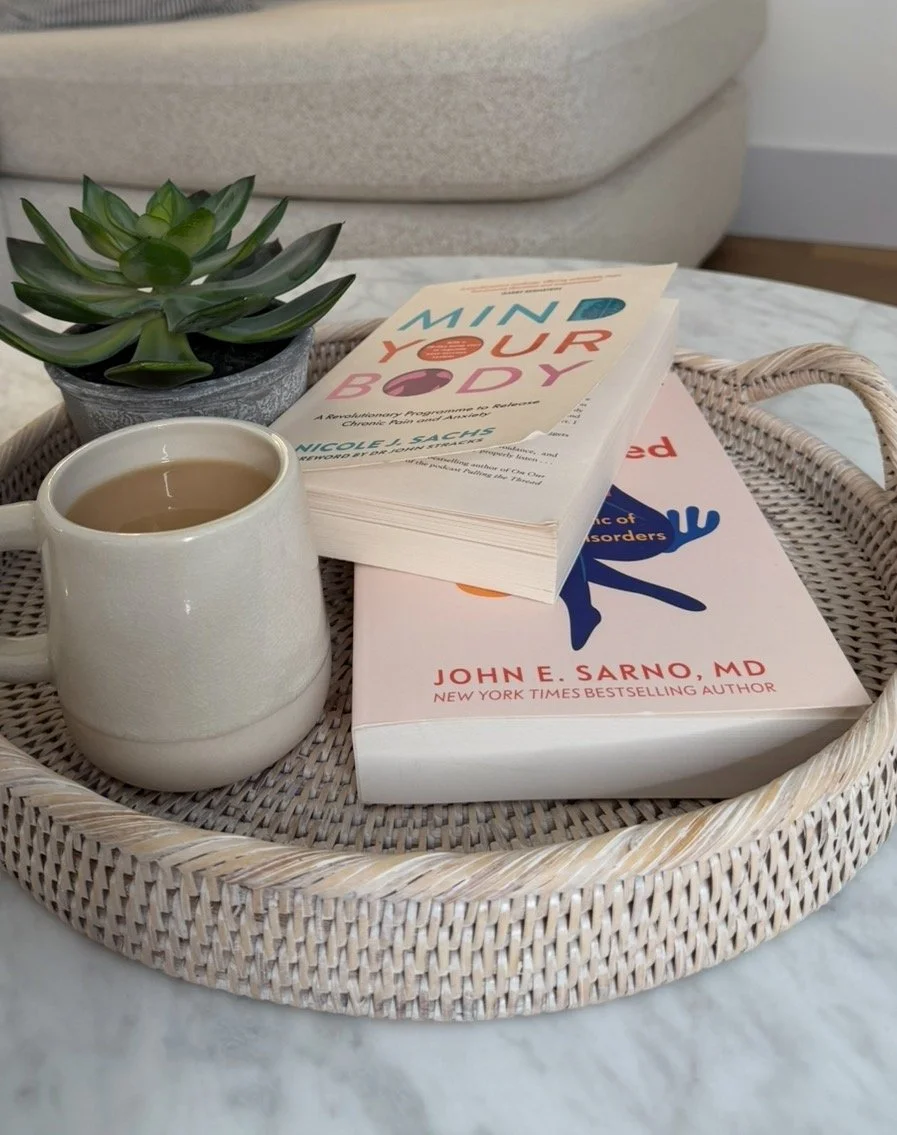
Of course, most people living with chronic pain aren't going to sit down and read decades of neuroscience papers. I certainly haven't read every research paper or every book written in this field.
I built my understanding piece by piece.
Alongside Schubiner and Sarno, psychotherapist Nicole Sachs became enormously influential in helping me do that. And her connection to Sarno goes much further than simply having once been his patient.
Sachs first came to Sarno as a young woman living with chronic back pain after being diagnosed with a degenerative spinal condition. After recovering, she went from being his patient to becoming a professional colleague.
She has described lecturing alongside Sarno at NYU on his patient alumni panels and, once established as a psychotherapist, supporting patients he referred into her private practice.¹⁴ That direct connection mattered to me.
Sachs subsequently spent more than two decades developing and translating these ideas through psychotherapy, teaching, retreats, courses and her podcast, The Cure for Chronic Pain.
She also developed JournalSpeak - her expressive-writing and emotional-processing practice - which has since become an important part of my own recovery. I'll explore that properly later in this series.
Her 2025 book Mind Your Body was particularly influential I my own understanding and recovery.¹⁵
If someone asked me where to begin reading about this subject, Mind Your Body would probably be the book I'd hand them first.
Not because one book contains all of modern pain science.
But because, for me, it makes an incredibly complicated subject feel understandable, relatable and human.
And Sarno's legacy remains very much part of Sachs' work today.
Through BreakAwake, the wider platform she co-founded with producer and entrepreneur Lisa Eisenpresser, Sachs brings together education, courses, community, podcasts and other resources around chronic pain and persistent symptoms.
And alongside Christina Sarno Horner - Dr Sarno's daughter and a psychotherapist herself — and Eisenpresser, Sachs has co-created the Sarno x Sachs Solution, a practitioner-training programme designed to carry Sarno's work forward while incorporating what has been learnt and developed since. The programme still includes readings from Sarno's The Divided Mind alongside Sachs' Mind Your Body.¹⁶
In many ways, I found that continuity fascinating.
An approach that had once centred around one controversial physician was now being developed, questioned, researched, translated and taught by a much wider community.
A growing community around the science
And Sachs was far from alone.
Here in the UK, I discovered SIRPA — the Stress Illness Recovery Practitioners Association — founded by physiotherapist Georgie Oldfield.
Oldfield discovered Sarno's work in 2007, visited him at the Rusk Institute in New York and went on to develop education and practitioner training around chronic pain and other persistent symptoms through a neuroplastic and mind-body framework. Sarno's The Mindbody Prescription and The Divided Mind remain among SIRPA's recommended pre-course reading today.¹⁷
I found Living Proof, a UK-based, recoveree-led not-for-profit organisation bringing together neuroscience education with something that became equally powerful for me: the experiences of people who had actually recovered or significantly improved.¹⁸
What I also began to see was how interconnected some of these people and organisations were. Living Proof works closely with SIRPA and describes itself as part of an “international mind-body community with a shared mission” to raise broader awareness of the neuroscience and hope for recovery. In April 2026, Living Proof and SIRPA jointly hosted a two-day Masterclass in Mindbody Medicine in Manchester with Dr Howard Schubiner, bringing together more than 120 people interested in understanding and raising awareness of this approach.¹⁸
And internationally, I discovered the Association for the Treatment of Neuroplastic Symptoms (ATNS), another not-for-profit organisation working to advance awareness and understanding of neuroplastic pain and other persistent symptoms. Schubiner was one of its co-founders, while its President, Dr David Clarke, has spent decades working with patients whose persistent symptoms were not explained by disease or injury and is also a Medical Advisor to Living Proof.¹⁹
The more I explored, the more I found researchers, clinicians, therapists, organisations, podcasts, books, websites, advocates and recoverees all helping make this increasingly complex body of science more accessible.
They don't all use exactly the same terminology, and they don't all advocate identical approaches. But there does seem to be an important collective mission running through much of this work: to raise awareness of what modern pain science has discovered, to share the possibility of recovery and to help this knowledge reach more of the people who might benefit from it.
Nicole Sachs has written about people in this field working “tirelessly” to bring greater awareness to these ideas.²⁰ That was certainly how it began to feel to me.
Collectively, this growing field helped me understand three profoundly hopeful truths:
The symptoms are real.
Recovery is possible.
And this knowledge deserves a far greater place within healthcare, education and public awareness.
As we explored in Blog 3, none of this meant that I suddenly believed every chronic symptom was neuroplastic.
Appropriate medical assessment remains essential, and genuine structural pathology and neuroplastic or sensitised pain processes aren't necessarily mutually exclusive.
What I hope this Blog has added is what, for me, was the evidence behind the explanation.
The principles I had begun to understand in Blog 3 were no longer simply interesting ideas. I could see the research behind them — and, importantly, evidence that for at least some people with appropriately assessed forms of persistent pain, approaches targeting these processes could produce substantial — and sometimes lasting — improvement.
That was very different from being promised a miracle.
It was proof.
And alongside that evidence, I was hearing more and more stories of people who had used this understanding as part of significant improvement and, in some cases, recovery.
For me, the question was gradually changing.
It was no longer simply:
Could I trust this science?
It was becoming:
What did it mean for me?
From Understanding the Science to Understanding Myself
By this point, I had enough evidence to take this science seriously.
I understood — and, importantly, began to accept — much more about how chronic pain could develop and continue.
But understanding the science was only part of the picture.
There was another question I needed to ask:
Why me?
Why had my nervous system become increasingly sensitised and protective?
Why had my symptoms appeared when they did?
Because understanding how pain works is one thing.
Understanding your own story within that science is another.
And, for me, both would become important foundations for what came next.
Next Time…
BLOG 5: CHRONIC PAIN AND WHY ME?
Understanding my story — and myself
In the next post, I'll explore my own story through this new understanding of pain and some of the different factors I now believe may have shaped my nervous system over time.
Because once I began to understand not only how pain could work, but how that science might apply to me, the practical recovery work began to make much more sense.
And that's where we're going next.
Gentle Reminder: I am not a medical expert. Everything I share here and on Instagram is based on my lived experience and the practices that have helped me personally - drawing on research, literature and insights from those who are experts, who I am learning from and who I admire. The content is not a substitute for professional medical advice. Always check with your doctor or a qualified specialist, if you’re struggling, unsure about symptoms or regarding any medical condition.
References and further reading
The references and further reading below, inform this ongoing series. This is not an exhaustive list but a starting point for anyone wanting to understand chronic pain more deeply.
-
1. Sarno JE. Mind Over Back Pain (1984); Healing Back Pain: The Mind-Body Connection (1991); The Mindbody Prescription (1998); The Divided Mind (2006).
Sarno's books chart the development of his thinking from persistent back pain towards a much broader mind-body model of persistent symptoms. His work remains historically influential within contemporary mind-body/neuroplastic education; The Divided Mind, for example, remains required reading for the Sarno x Sachs Solution, while SIRPA lists both The Mindbody Prescription and The Divided Mind among its pre-course reading options.2. Galinsky M, Hawley S, Beilinson D. All the Rage: Saved by Sarno.
Documentary exploring Sarno's work, his patients, his influence and the resistance his ideas encountered.3. Brinjikji W, Luetmer PH, Comstock B, et al. Systematic Literature Review of Imaging Features of Spinal Degeneration in Asymptomatic Populations. AJNR Am J Neuroradiol. 2015;36(4):811–816.
A systematic review of 33 studies involving 3,110 asymptomatic people. Degenerative spinal findings were common and increased substantially with age. This does not mean structural findings cannot cause pain; it demonstrates why imaging findings need to be interpreted in the wider clinical context.4. Clauw DJ. Fibromyalgia: A Clinical Review. JAMA. 2014;311(15):1547–1555.
A useful clinical overview of fibromyalgia and evidence relating to altered central pain processing and pain amplification.5. Wager TD, Atlas LY, Lindquist MA, et al. An fMRI-Based Neurologic Signature of Physical Pain. N Engl J Med. 2013;368:1388–1397.
Across four studies involving 114 participants, Wager and colleagues identified an fMRI-based pattern associated with experimentally induced physical pain. Importantly, this was experimental pain research rather than a diagnostic brain scan for chronic pain.6. Lumley MA, Schubiner H, et al. — Emotion Awareness and Expression Therapy (EAET).
Schubiner and psychologist Mark Lumley have collaborated extensively in developing and studying EAET across chronic pain populations. Schubiner subsequently also became part of the research team studying PRT.7. This Might Hurt.
Documentary following people living with chronic pain through a mind-body treatment programme involving Dr Howard Schubiner and exploring both the science and lived experience of this approach.8. Chatterjee R, Schubiner H. Feel Better, Live More, Episode #310, How to Heal Chronic Pain (2022).
One of the clearest conversations I found when first trying to understand pain as a protective response and how the brain, nervous system, stress, learning and perceived danger can influence persistent symptoms.9. Donnino MW, Thompson GS, Mehta S, et al. Psychophysiologic Symptom Relief Therapy for Chronic Back Pain: A Pilot Randomized Controlled Trial. PAIN Reports. 2021;6(3).
A small pilot RCT involving 35 adults with nonspecific chronic back pain. At 26 weeks, 63.6% of the PSRT group reported being pain-free, compared with 25% receiving mindfulness-based stress reduction and 16.7% receiving usual care.10. Ashar YK, Gordon A, Schubiner H, et al. Effect of Pain Reprocessing Therapy vs Placebo and Usual Care for Patients With Chronic Back Pain: A Randomized Clinical Trial. JAMA Psychiatry. Published online 2021;79(1):13–23 (2022).
The Boulder Back Pain Study randomised 151 adults with primary chronic back pain. At post-treatment, 66% receiving PRT were pain-free or nearly pain-free, compared with 20% receiving placebo and 10% receiving usual care, with gains largely maintained through one year.11. Ashar YK, Lumley MA, Perlis RH, et al. Reattribution to Mind-Brain Processes and Recovery From Chronic Back Pain: A Secondary Analysis of a Randomized Clinical Trial. JAMA Network Open. 2023;6(9).
A particularly interesting secondary analysis: increased attribution of pain to mind-brain processes was associated with reductions in pain and mediated longer-term treatment effects. It provides research evidence for something repeatedly emphasised throughout this field: how we understand our symptoms can matter.12. Ashar YK, Low EL, Knight K, et al. Pain Reprocessing Therapy vs Placebo and Usual Care for Patients With Chronic Back Pain: 5-Year Follow-Up of a Randomized Clinical Trial. JAMA Psychiatry. 2025;82(10):1049–1051.
At five years, participants originally assigned to PRT reported significantly lower pain than the placebo and usual-care groups. Among those providing five-year data, 55% of the PRT group were nearly or completely pain-free, compared with 26% placebo and 36% usual care. This provides evidence that benefits persisted for many participants, while the authors also note limitations including the original sample's relatively low-to-moderate chronic back-pain severity.13. Kent P, Haines T, O'Sullivan P, et al. Cognitive Functional Therapy with or without movement sensor biofeedback versus usual care for chronic, disabling low back pain (RESTORE). The Lancet. 2023.
An important additional strand of evidence because CFT is not PRT. It uses an individualised biopsychosocial approach addressing factors including beliefs, fear, movement, behaviour and lifestyle.14. Sachs N — BreakAwake biography.
Sachs describes progressing from Sarno's patient to professional colleague, lecturing with him at NYU and later supporting patients he referred to her psychotherapy practice.15. Sachs N. Mind Your Body (2025); and The Cure for Chronic Pain podcast.
These became some of the resources that most helped me translate complex mind-body and neuroplastic ideas into something understandable, relatable and applicable to my own life.16. The Sarno x Sachs Solution — BreakAwake.
Practitioner training created by Nicole Sachs, Christina Sarno Horner and Lisa Eisenpresser. Its course materials include both Sarno's The Divided Mind and Sachs' Mind Your Body.17. SIRPA — Stress Illness Recovery Practitioners Association.
UK-based education, resources and practitioner training relating to neuroplastic/mind-body approaches to chronic pain and other persistent symptoms. Its current pre-course reading options include Sarno's The Mindbody Prescription and The Divided Mind. Also list Georgie Oldfields book & link on Amazon.18. Living Proof.
UK-based, recoveree-led not-for-profit organisation combining neuroplastic symptom education with recovery stories, resources and events.19. Association for the Treatment of Neuroplastic Symptoms (ATNS); David D. Clarke, MD.
ATNS brings together clinicians, researchers and educators working with neuroplastic symptoms. Its President, Dr David Clarke, is Clinical Assistant Professor of Gastroenterology Emeritus at Oregon Health & Science University and a Medical Advisor to Living Proof. He reports having diagnosed and treated more than 7,000 patients whose symptoms were not explained by organ disease or injury.20. Sachs N. Mind Your Body (2025).
-
BOOKS:
Nicole Sachs - Mind Your Body
Dr Howard Schubiner - Unlearn Your Pain (May 2026)
Dr John Sarno -The Divided Mind : https://amzn.eu/d/0e0fsveQ (2024 Ed)
https://amzn.eu/d/02FJWYfO (2007 Ed)
WEBSITES:
SIRPA UK - https://www.sirpa.org/
UNLEARN YOUR PAIN: Dr Howard Schubiner - https://www.unlearnyourpain.com
PODCASTS:
https://drchatterjee.com/how-to-heal-chronic-pain-with-dr-howard-schubiner/
Nicole Sachs: The Cure for Chronic Pain Podcast
-
Nicole Sachs
Book: Mind Your Body (2023) - https://amzn.eu/d/9i47eaK
Podcast: The Cure for Chronic Pain https://podcasts.apple.com/us/podcast/the-cure-for-chronic-pain-with-nicole-sachs-lcsw/id1439580309
Dr Howard Schubiner
Website: https://www.unlearnyourpain.com
Book: Unlearn Your Pain (2026 Edition) - https://amzn.eu/d/00PGgqr
Dr John Sarno:
The Divided Mind - https://amzn.eu/d/0e0fsveQ (2024 Edition)
https://amzn.eu/d/02FJWYfO (2007 Edition)
Healing Back Pain (Reissue Edition) :The Mind-Body Connection (2018) - https://amzn.eu/d/01IAfZC5
The Mindbody Prescription: Healing the Body, Healing Pain (1998) - https://amzn.eu/d/079VIcIL
Alan Gordon (Pain Reprocessing Therapy) -https://www.painreprocessingtherapy.com/
Lorimer Moseley & David Butler (Pain Neuroscience Education) -
https://www.noigroup.com/Professor Peter O’Sullivan (Cognitive Functional Therapy) -
https://bodylogic.physio/ -
Dr Gabor Maté
When the Body Says No (2003) - https://amzn.eu/d/0t9FU8X
Dr Bessel van der Kolk
The Body Keeps the Score - https://www.amazon.co.uk/dp/0141978619
Sara Szal Gottfried MD
The Autoimmune Cure - https://amzn.eu/d/0hoLks7p
-
https://drchatterjee.com/how-to-heal-chronic-pain-with-dr-howard-schubiner/
Nicole Sachs: The Cure for Chronic Pain Podcast
Other Podcasts featuring Dr Howard Schubiner
https://unlearnyourpain.com/podcasts-with-dr-howard-schubiner/
-
Alan Gordon et al. (2021) - Pain Reprocessing Therapy (PRT), JAMA Psychiatry
https://jamanetwork.com/journals/jamapsychiatry/fullarticle/2784694Tor Wager et al. (2013) - Neurologic Pain Signature (fMRI research)
https://www.nejm.org/doi/full/10.1056/NEJMoa1204471 -
UK:
NHS - Chronic Pain Overview (UK)
https://www.nhs.uk/conditions/chronic-pain/Versus Arthritis (UK statistics)
https://www.versusarthritis.org/about-arthritis/data-and-statistics/British Pain Society.
UK Pain Messages - Infographic (2024)
https://www.britishpainsociety.org/media/resources/files/UK_pain_messages_infographic_April_2024.pdfNHS Fibromyalgia Symptoms - https://www.nhs.uk/conditions/fibromyalgia/symptoms/
GLOBAL:
IASP (International Association for the Study of Pain - global data)
https://www.iasp-pain.org/resources/factsheets/International Association for the Study of Pain (IASP).
High-Impact Chronic Pain Fact Sheet (2023)
https://www.iasp-pain.org/resources/fact-sheets/high-impact-chronic-pain/
Join the wider conversation
This post is part of an ongoing series exploring Chronic Pain and the mind-body connection.
If you’d like to see the accompanying Instagram reels, or related content across Chronic Pain, Pilates and Movement, Mind-Body Wellbeing, or if you’d like to leave a comment
You can find it over on Instagram @rachel_kirkbride
